
Ask the Coding Coach

A new resource for your practice has been approved by the AAP Board of Trustees: “How to Create a Clean Dental Claim.” The goal of submitting a clean claim is to receive payment as quickly as possible, without the need for additional documentation or responding to questions the insurance carrier might have. This tool will help your front desk and insurance personnel do just that.
It is important to verify a patient’s insurance coverage before they receive treatment. You must determine if a patient is eligible for periodontal benefits, or implant treatment. Many plans have a waiting period for treatment or do not allow reimbursement for specific procedures. You should also verify if a patient’s deductible applies, or if there are limitations on how often a procedure can be reimbursed. Many insurance carriers have frequency limitations related to periodontal and implant services. Some carriers allow scaling and root planing every 24-36 months, for example. We are also finding that periodontal maintenance, in some plans, is only covered for a limited amount of time after definitive treatment.
It may sound simplistic but checking details such as the spelling of a patient’s name, date of birth, group, and subscriber numbers are important. A simple mistake such as transposing letters in a name can cause prolonged delays.
Always be current with CDT codes and recognize that coding changes occur annually and become effective January 1 of each year. You should always code for what you do. Chart documentation should match the code submitted. Make sure that the tooth number, quadrant, or implant number is specified on the claim.
Another key factor for a clean claim is attaching proper documentation. Periodontal procedures required more concise documentation than any other procedures. Attaching proper documentation avoids “pending “claims. Current full mouth radiographic images should be included in claim submissions. Remember, too, that even though you may be treating a soft tissue problem, radiographs are essential for determining the prognosis of a tooth or condition of adjacent teeth. Full mouth periodontal charting should be included, which includes mobility, recession, and all periodontal findings.
Intraoral photographs and diagnoses including stage and grade are also great pieces of supporting documentation. It is always helpful to keep a record of the most common plans your patients have, and what documentation those plans require.
The new clean claim resource can be found here. https://members.perio.org/communities/community-home/librarydocuments
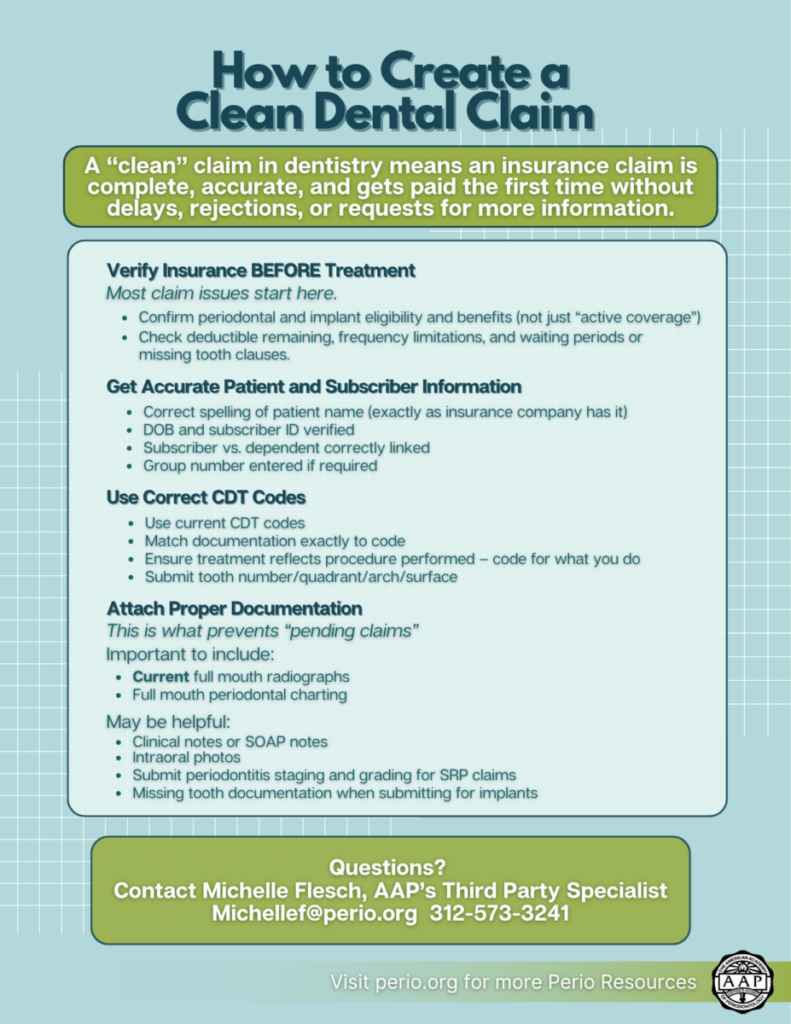
It has been designed to be printed out and kept at the front desk for quick and easy reference when submitting claims, which will save time and enhance efficiency in claim processing.
Questions?
Submit your third-party questions to [email protected]. Members with coding questions or difficulties with insurance claims can also contact the AAP’s Third-Party Specialist at 312-573-3241 or [email protected].
Need more help with coding? Click here to sign up for our insurance coding workshops.
A new resource for your practice has been approved by the AAP Board of Trustees: “How to Create a Clean Dental Claim.” The goal of submitting a clean claim is to receive payment as quickly as possible, without the need for additional documentation or responding to questions the insurance carrier might have. This tool will help your front desk and insurance personnel do just that.
It is important to verify a patient’s insurance coverage before they receive treatment. You must determine if a patient is eligible for periodontal benefits, or implant treatment. Many plans have a waiting period for treatment or do not allow reimbursement for specific procedures. You should also verify if a patient’s deductible applies, or if there are limitations on how often a procedure can be reimbursed. Many insurance carriers have frequency limitations related to periodontal and implant services. Some carriers allow scaling and root planing every 24-36 months, for example. We are also finding that periodontal maintenance, in some plans, is only covered for a limited amount of time after definitive treatment.
It may sound simplistic but checking details such as the spelling of a patient’s name, date of birth, group, and subscriber numbers are important. A simple mistake such as transposing letters in a name can cause prolonged delays.
Always be current with CDT codes and recognize that coding changes occur annually and become effective January 1 of each year. You should always code for what you do. Chart documentation should match the code submitted. Make sure that the tooth number, quadrant, or implant number is specified on the claim.
Another key factor for a clean claim is attaching proper documentation. Periodontal procedures required more concise documentation than any other procedures. Attaching proper documentation avoids “pending “claims. Current full mouth radiographic images should be included in claim submissions. Remember, too, that even though you may be treating a soft tissue problem, radiographs are essential for determining the prognosis of a tooth or condition of adjacent teeth. Full mouth periodontal charting should be included, which includes mobility, recession, and all periodontal findings.
Intraoral photographs and diagnoses including stage and grade are also great pieces of supporting documentation. It is always helpful to keep a record of the most common plans your patients have, and what documentation those plans require.
The new clean claim resource can be found here. https://members.perio.org/communities/community-home/librarydocuments
It has been designed to be printed out and kept at the front desk for quick and easy reference when submitting claims, which will save time and enhance efficiency in claim processing.
Questions?
Submit your third-party questions to [email protected]. Members with coding questions or difficulties with insurance claims can also contact the AAP’s Third-Party Specialist at 312-573-3241 or [email protected].
Need more help with coding? Click here to sign up for our insurance coding workshops.